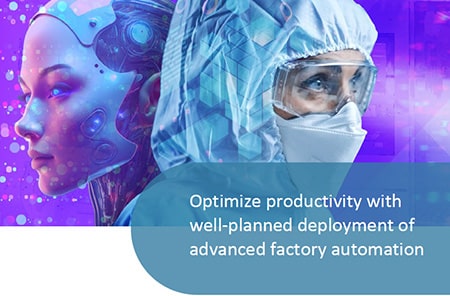
Process Quality for Semiconductor Manufacturing
Improve yield, reduce variation, and make faster quality decisions with AI-enabled manufacturing intelligence
Semiconductor manufacturers need faster ways to detect process drift, reduce defects, and improve consistency across tools, chambers, recipes, and production lines. Applied SmartFactory Process Quality solutions combine automation, advanced analytics, and AI-enabled decision support to help fabs identify quality risks earlier, strengthen process control, and move from reactive troubleshooting to proactive improvement.
What are Process Quality solutions in semiconductor manufacturing?
Process Quality solutions help semiconductor manufacturers improve yield, reduce process variation, detect quality issues earlier, and make faster decisions when process or equipment conditions begin to drift. These solutions combine capabilities such as Predictive Metrology, Run-to-Run Control, SPC, Fault Detection, Recipe Management System, Defect Classification, Defect Source, and AI-powered engineering knowledge tools to improve visibility and control across the fab.
For manufacturers, Process Quality is not just a software category. It is a practical approach to improving how engineers monitor production, understand process behavior, identify root causes, and prevent quality issues from spreading across lots, tools, or production areas.
Applied SmartFactory Process Quality solutions help fabs:
- Detect process drift and abnormal equipment behavior earlier
- Improve yield by reducing variation across process steps
- Use AI and analytics to accelerate diagnosis and root cause analysis
- Improve consistency in recipe execution and process control
- Reduce manual investigation time for defects and excursions
- Support continuous improvement and zero-defect manufacturing initiatives
Why Process Quality Matters
Process quality is where yield, consistency, and engineering decision-making come together
In semiconductor manufacturing, small changes can have large consequences. A minor shift in equipment behavior, recipe execution, metrology results, or process conditions can affect yield, increase rework, slow cycle time, or create recurring quality problems that are difficult to diagnose.
Many fabs already have valuable data across tools, process steps, metrology systems, maintenance systems, inspection systems, and engineering workflows. The challenge is making that data usable early enough to prevent quality issues, not just explain them after they occur.
A stronger Process Quality strategy helps manufacturers answer critical operational questions:
- Are processes staying within expected control limits?
- Which tools, chambers, layers, recipes, or production areas are contributing to variation?
- Can metrology values or quality risks be predicted sooner?
- Are defects isolated events or signs of a broader process issue?
- What prior knowledge can help engineers diagnose the issue faster?
- How can the fab reduce dependency on manual investigation and tribal knowledge?
Applied SmartFactory Process Quality solutions help teams connect automation, analytics, AI, and engineering knowledge so they can improve quality decisions across the manufacturing lifecycle.
How Manufacturers Improve Process Quality
Manufacturers work to understand how leading fabs improve quality performance before evaluating specific solutions. A successful Process Quality strategy typically focuses on four areas—and these are the four areas the solutions below are organized around:
Detect and predict quality risks
Identify process drift, equipment anomalies, and quality risks before they affect production.
Control and optimize process performance
Improve consistency across tools, chambers, recipes, and manufacturing lines.
Diagnose and resolve issues faster
Connect data, defects, and engineering knowledge to resolve issues faster.
Automate and sustain operational excellence
Use automation, analytics, and AI to make quality improvements sustainable.
Explore AI-enabled Process Quality solutions that help fabs improve control, consistency, and yield
Detect & Predict Quality Risks
Gain earlier visibility into process variation, equipment issues, and emerging quality concerns
Early detection is one of the most effective ways to protect yield and reduce manufacturing risk. As device complexity grows and process windows become tighter, engineering teams need earlier insight into process drift, equipment anomalies, and changing operating conditions that could affect product quality. These solutions help manufacturers move beyond reactive monitoring and identify potential problems sooner.
SPC
Monitor process health and identify variation before it affects yield
SPC helps manufacturers detect abnormal process behavior by monitoring performance trends, control limits, and variation across production operations. Earlier visibility into process shifts allows engineering teams to respond before quality issues become widespread.
Fault Detection
Identify abnormal equipment behavior before it impacts production
Fault Detection monitors equipment and process signals to identify conditions that may indicate developing problems. Early identification helps reduce yield loss, minimize downtime, and improve response to process excursions.
Predictive Metrology
Predict process outcomes earlier using AI and manufacturing data
Predictive Metrology applies machine learning to estimate metrology results before physical measurements are completed. This helps manufacturers identify process risks sooner, improve decision-making speed, and reduce delays associated with traditional measurement workflows.
Control & Optimize Process Performance
Reduce variability and improve consistency across the fab
Consistent manufacturing performance requires more than visibility. Manufacturers must continuously manage process variation, optimize recipes, and maintain stable production conditions across tools, products, and manufacturing lines. These solutions help engineering teams improve process capability while reducing manual effort and unnecessary variation.
Run-to-Run Control
Improve consistency from one production run to the next
Run-to-Run Control adjusts process behavior based on previous production results and process feedback. By continuously refining process settings, manufacturers can improve repeatability, maintain tighter control, and support yield performance over time.
Advanced Recipe Tuning
Improve process capability with AI-enhanced recipe optimization
Advanced Recipe Tuning helps engineers identify opportunities to optimize recipe performance using manufacturing data and AI-driven analysis. This supports improved process capability, tighter control, and reduced variability across production operations.
Recipe Management System
Standardize recipe execution across equipment and production environments
Recipe Management System helps ensure that approved recipes are consistently deployed and executed throughout manufacturing operations. This reduces the risk of unauthorized changes, manual errors, and recipe-related process variability.
Diagnose & Resolve Issues Faster
Accelerate investigations with AI-powered insight and engineering knowledge
When yield excursions occur, speed matters. The longer it takes to identify a root cause, the greater the risk of production disruption, scrap, and recurring quality issues. These solutions help manufacturers shorten investigation cycles, improve defect analysis, and enable more consistent engineering decisions.
Defect Classification
Improve defect analysis with faster and more consistent classification
Defect Classification helps manufacturers categorize defects more accurately and efficiently. Improved classification consistency helps engineering teams focus on meaningful trends and accelerate quality investigations.
Defect Source
Identify likely defect origins to speed root cause analysis
Defect Source helps engineers determine where defects likely originated within the manufacturing process. Faster source identification reduces troubleshooting effort and accelerates corrective action.
Knowledge Advisor
Use AI to connect factory data with engineering expertise
Knowledge Advisor connects factory information, historical investigations, and engineering knowledge to support faster problem resolution. By helping teams find relevant insights more quickly, it improves consistency and reduces dependency on tribal knowledge.
Automate & Sustain Operational Excellence
Build a foundation for long-term Process Quality improvement
Sustained Process Quality requires reliable execution, strong traceability, and disciplined maintenance practices. As manufacturing operations become increasingly complex, automation helps maintain consistency and scalability. These solutions help create the operational foundation needed for continuous improvement.
Equipment Automation
Improve consistency through automated manufacturing execution
Equipment Automation reduces manual intervention in production workflows and helps standardize equipment interactions. This supports greater consistency, reduced human error, and improved productivity.
Asset Trace
Improve visibility into asset usage and history
Asset Trace enables manufacturers to track assets throughout their lifecycle, providing better visibility into movement, utilization, and operational history. This information can support both quality investigations and operational improvement efforts.
Maintenance Management
Strengthen maintenance practices that support process stability
Maintenance Management helps coordinate scheduled and unscheduled maintenance activities across manufacturing operations. Better maintenance execution contributes to improved equipment reliability, process consistency, and production performance.
Process Quality FAQ
Why is Process Quality important to semiconductor manufacturers?
Small variations in equipment behavior, process conditions, metrology results, or recipe execution can impact yield and product quality. Process Quality solutions help manufacturers identify, control, and resolve these issues before they become larger operational problems.
How can AI improve Process Quality?
AI helps manufacturers identify patterns within large volumes of manufacturing data, predict potential quality risks, accelerate root cause analysis, and support faster engineering decisions. AI can also help preserve and scale engineering knowledge across teams, shifts, and sites.
How does Predictive Metrology improve decision-making?
Predictive Metrology estimates metrology results using machine learning models and manufacturing data. This allows engineers to gain earlier visibility into potential process issues and take action sooner.
What is the difference between SPC and Fault Detection?
SPC focuses on identifying variation and trends within process data, while Fault Detection focuses on identifying abnormal equipment or process behavior. Together, they provide complementary visibility into manufacturing performance.
How can manufacturers reduce process variation?
Reducing process variation typically requires a combination of process monitoring, Run-to-Run Control, recipe management, equipment performance management, and continuous optimization initiatives.
Why is root cause analysis difficult in semiconductor manufacturing?
Manufacturing data is often distributed across multiple systems, tools, and departments. Identifying relationships between defects, process behavior, equipment conditions, process history, and historical events can be time-consuming without the right data, analytics, and engineering knowledge.
How can AI help accelerate root cause analysis?
AI can help engineers connect information across manufacturing systems, identify meaningful patterns, surface relevant historical events, and prioritize likely contributing factors, reducing the time required to investigate complex process quality issues.
Why is Recipe Management System important for Process Quality?
Recipe Management System helps ensure approved recipes are controlled, managed, and executed consistently. This reduces the risk of manual errors, unauthorized changes, and inconsistent setup conditions that can affect Process Quality and yield.
How do Defect Classification and Defect Source help engineering teams?
Defect Classification helps teams categorize defects more consistently and efficiently. Defect Source helps identify where defects likely originated. Together, these capabilities help fabs move faster from defect detection to diagnosis, root cause analysis, and corrective action.
Ready to improve Process Quality across your fab?
Applied SmartFactory Process Quality solutions help semiconductor manufacturers reduce variation, detect issues earlier, accelerate root cause analysis, and improve manufacturing consistency with AI-enabled automation and analytics.