
For new semiconductor fabs, traversing the path of factory automation is complex in even the best of circumstances. For example, configuring an MES and modeling complex processes can be overwhelming. This complication is compounded if manufacturers rely on IT-centric companies with little or no semiconductor experience for implementation. In addition, fabs frequently fall behind their startup timelines because they don’t commit the experienced resources required to install and configure automation software systems early enough in the process.
If you’re responsible for deploying an MES for a greenfield fab, are you experiencing similar challenges? Are you meeting required milestones for achieving first wafer production? To help new 300mm fabs on their journey to increasing factory automation, this blog highlights the path to achieving a successful MES deployment. It focuses on the first steps in this process—setup and basic readiness—to support first wafer production within 90 days.
Meeting Milestones to Stay Competitive
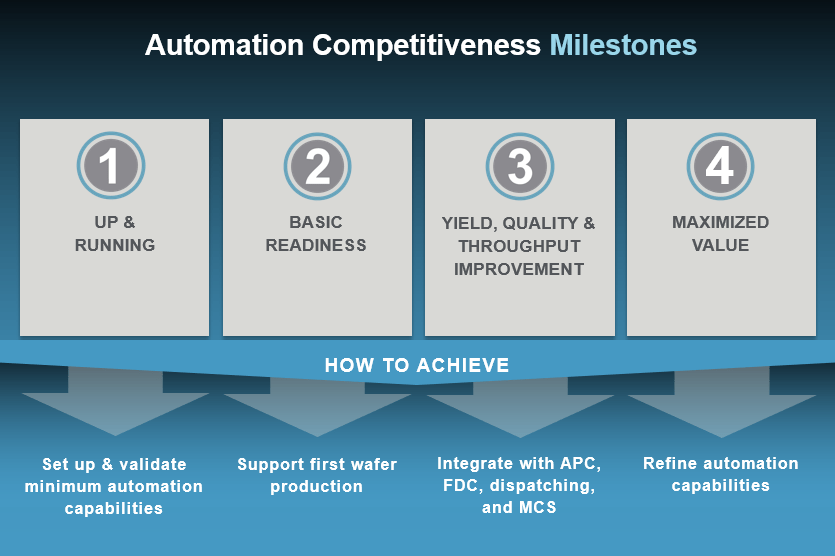
- Getting up and running. This is accomplished by setting up and validating the minimum factory automation capabilities not requiring automation.
- Basic readiness. To support first wafer production, fabs must implement basic automation to run automated data collection with statistical process control (SPC), manual dispatching and tracking, and equipment automation.
- Increased yield, quality, and throughput. To realize these KPIs, fabs must increase their factory automation capabilities by further integration with advanced process control (APC), fault detection and classification (FDC), dispatching, and material control systems.
- Maximized value. To maximize value, fabs must continually refine these automation capabilities (for example, by tuning dispatching scenarios based on scheduling inputs and automating MES scenarios).
Getting Up and Running
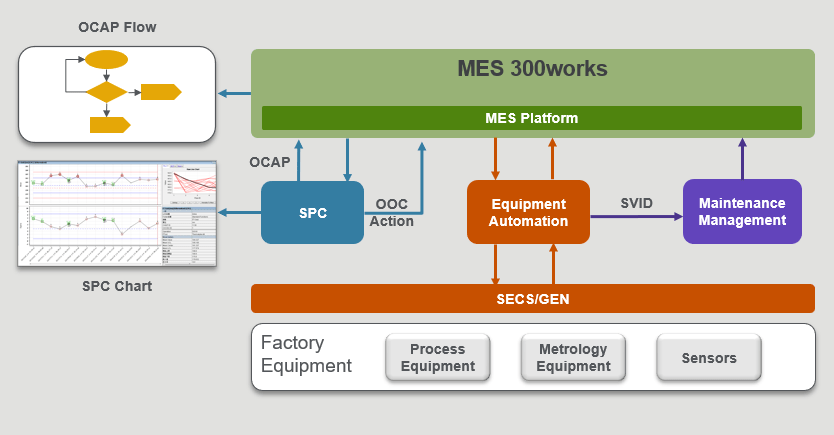
- Installing and configuring the MES
- Automating equipment
- Integrating with SPC
- Configuring equipment maintenance
How Can SmartFactory MES 300works Help?
With SmartFactory 300works, it’s possible to get up and running with basic automation, which enables operators to control when wafer processing starts, eliminating the need for manual track in and track out. And you can enable support for initial wafer starts in only 90 days.
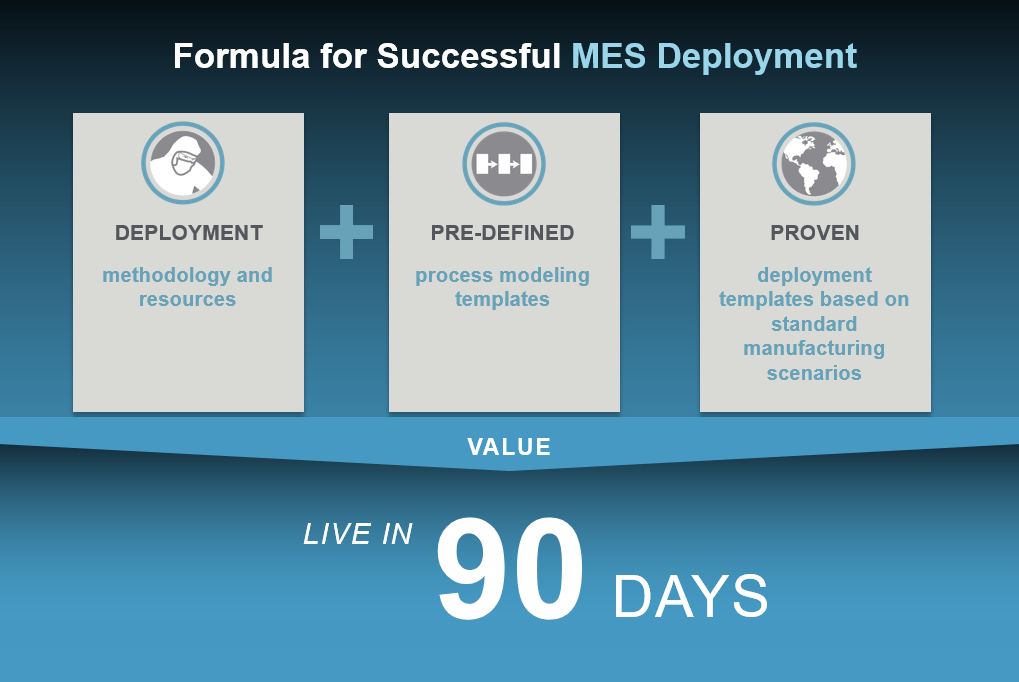
How is this accomplished? It’s done with our proven deployment plan and systematic, step-by-step deployment methodology. With over 30 years of “hardened” experience in semiconductor factories, our deployment teams are adept at getting fabs up and running on schedule while minimizing deployment risk using the following (see also Figure 3):
- Battle-tested deployment methodology and resources. With SmartFactory 300works, fabs can tap into a deployment team with knowledge on what works and what doesn’t work—some equipment, for example, may not be automation ready and require special or unique scenarios. In such cases, the team can consult with customers on making the equipment ready for automation.
- Pre-defined process modeling templates. These templates provide a knowledge base of lot and carrier naming rules, equipment processes, and so forth.
- Proven deployment templates based on standard manufacturing scenarios. This enables fabs, for example, to access resources about different equipment types and operating scenarios.
A Case in Point
Next Steps
Successfully deploying automation software systems to support manual operation and first wafer production is only the first step in the journey to moving to a fully automated fab. But this journey can be worth the effort with the help of an experienced team to provide proven deployment and modeling templates, as well as the right methodology. In our next blog, we’ll discuss the next steps on this journey, identifying priorities to achieve advanced automation readiness.
Ready to contact us to learn more about our MES deployment methodology?